


Enhancing public health in South Asia through the SSPH+ LSS Regional Learning Hubs
Key takeaways
The SSPH+ Lugano Summer School in Public Health Policy, Economics, and Management (LSS) and its Learning Hub Model have become a model of inclusiveness: spaces where education, innovation, and collaboration come together to advance global public health. The LSS represents a truly global platform that connects geographies and transcends economic and cultural barriers, enabling participants from LMICs and HICs to learn side by side.
"Being part of this global learning environment greatly boosted my confidence. The program offered not only up-to-date knowledge, but also valuable mentorship, encouragement of teamwork, and meaningful engagement with international experts and peers. Opportunities like this are truly transformative." - Pakistan Hub, Participant
The SSPH+ Lugano Summer School in Public Health Policy, Economics, and Management (LSS) and its Learning Hub Model have become a model of inclusiveness: spaces where education, innovation, and collaboration come together to advance global public health. The LSS represents a truly global platform that connects geographies and transcends economic and cultural barriers, enabling participants from LMICs and HICs to learn side by side.
We live in a world where inequities in access to education and training persist, and many countries grapple with complex health challenges that demand innovative and sustained responses. Many professionals need affordable, high-quality and practice-oriented learning opportunities, but lack access to it.
In this context, the SSPH+ Lugano Summer School in Public Health Policy, Economics, and Management (LSS) and its Learning Hub Model have become a model of inclusiveness: spaces where education, innovation, and collaboration come together to advance global public health. The LSS represents a truly global platform that connects geographies and transcends economic and cultural barriers, enabling participants from LMICs and HICs to learn side by side.
The Hub Model – which enables groups to join the LSS online together from designated venues around the world – has proven to be extremely beneficial in enhancing inclusive and mutual learning.
The Learning Hub Model addressed key challenges of remote participation – such as technological barriers and reduced interaction – while preserving the dynamic, high-quality and peer-driven learning of in-person sessions.
Within this format, the LSS provides academic leadership and methodological expertise, ensuring scientific rigor, access to well-structured sessions, and to an international network of public health professionals. Local hosting institutions bring to the LSS their experiences rooted in local realities and strong connections to communities and health systems. In a spirit of collaboration and mutual respect, Hubs allow to value each other’s perspectives and combine global academic excellence with local, field-based expertise.
Through these Hubs, hundreds of participants in LMICs have been able to join the LSS without the barriers of cost or distance, thus multiplying the reach and impact of the program and its mutual learning for change mission.
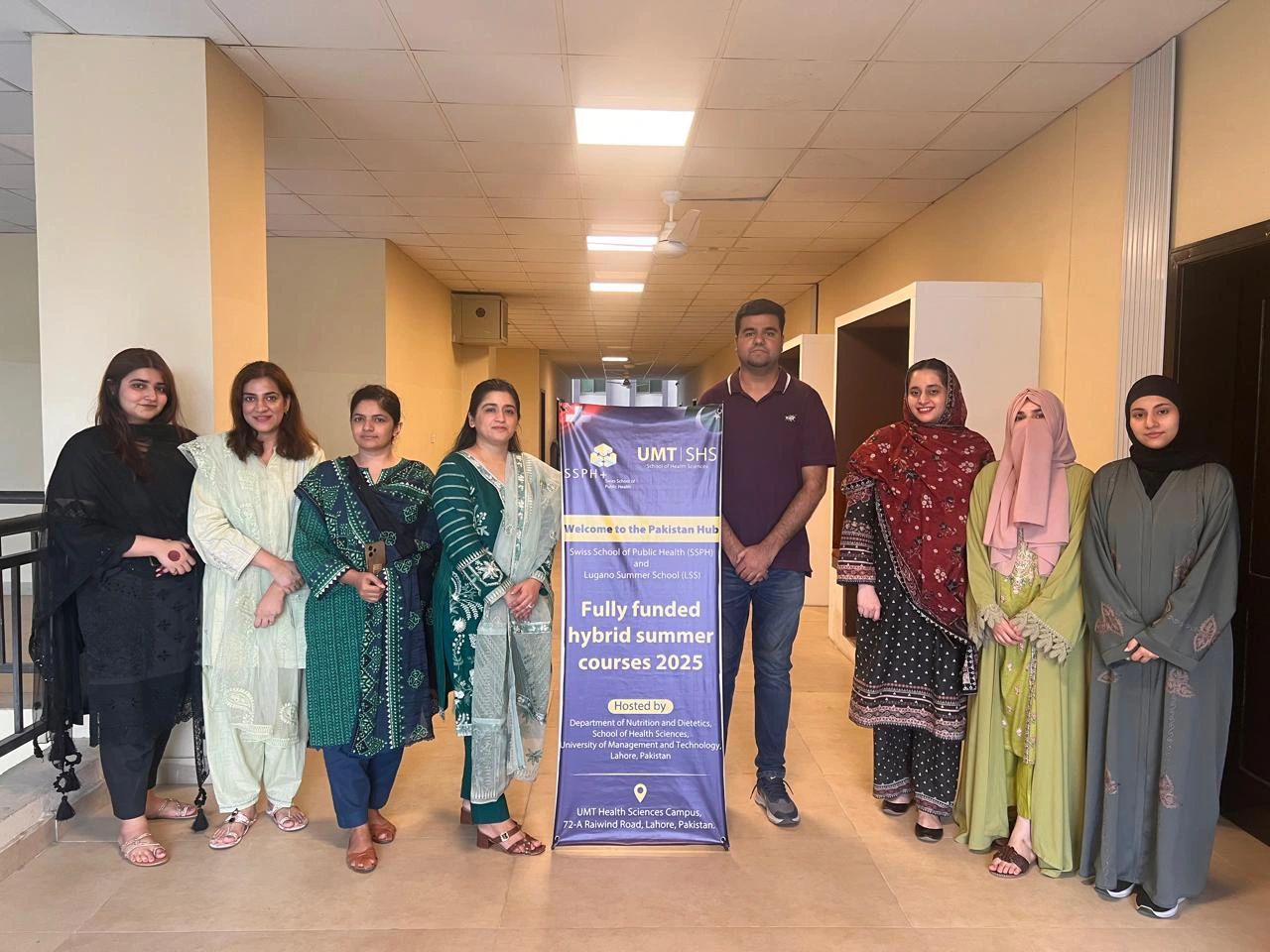
The Swiss Leading House South Asia played a pivotal role by providing the financial and strategic foundation for expanding and strengthening the LSS engagement in the region. Its Connect & Collaborate Grant made it financially viable for 17 professionals and academics from Pakistan and Nepal – who represent the present and the future of public health in their countries – to gather in two regional Hubs, in Lahore and Kathmandu, and join this game-changing experience.
The Leading House’s contribution directly advanced the mission of equitable, inclusive, and sustainable public health capacity building in South Asia.
Through the collaboration between the SSPH+ LSS, the Swiss Leading House South Asia, and local partner institutions, the project delivered a measurable and lasting impact.
At the individual level, participants gained enhanced knowledge and practical skills, which they can apply to their ongoing work and research. Many have already begun integrating these learnings into their practice, multiplying the benefits within their institutions.
At the institutional level, local partners – the University of Management and Technology (Pakistan), FAIRMED, and the Patan Academy of Health Sciences (Nepal) – enhanced their visibility, supported their internationalization agendas, and strengthened their capacity to host international hybrid programs.
At the regional level, the program facilitated the establishment of meaningful connections – both locally, among professionals working in similar contexts, and internationally, with peers and mentors across the SSPH+ LSS network. Notably, the project also promoted women’s leadership, as both Hubs were coordinated by women who successfully led complex, multinational collaborations.
A particularly powerful example of the LSS’ long-term influence is the career advancement of Dr. Afifa Tanweer, Coordinator of the Pakistan Hub. She was awarded a Swiss Government Excellence Scholarship to pursue postdoctoral research in Switzerland under the supervision of an SSPH+ LSS faculty member. This achievement, made possible through the professional relationships built during her LSS journey, represents a major milestone in her academic career and highlights the concrete opportunities fostered by the program – showing how the LSS not only builds skills but also opens pathways for international recognition and collaboration.
The depth of the program’s impact is also evident in the first-hand reflections of participants and coordinators from the two Hubs. Many described the experience as transformative, highlighting how the curriculum expanded their horizons, provoked deep reflection, and encouraged practical action.
Being part of this global learning environment greatly boosted my confidence. The program offered not only up-to-date knowledge, but also valuable mentorship, encouragement of teamwork, and meaningful engagement with international experts and peers. Opportunities like this are truly transformative.
Pakistan Hub, Participant
I would like to sincerely thank SSPH+, Leading House South Asia, and Swiss Plexus for this incredible opportunity. Quite frankly, without this funding, it would not have been possible to offer these courses to our students and faculty. This opportunity has not only enabled our faculty to enhance their teaching skills but also strengthened the foundation for future academic offerings. Additionally, participants greatly benefited from the valuable networking opportunities provided through this platform.
Pakistan Hub, Hub Coordinator
The online training was a transformative experience for me as a public health professional. I now approach intervention design more critically, aiming for meaningful and measurable community outcomes. This training is highly valuable for anyone involved in project design and evaluation.
Nepal Hub, Participant
Participants’ feedback highlighted the value of the courses, particularly in helping them gain a deeper understanding of the topics covered. From the organizers’ perspective, the initiative also represented a valuable opportunity for institutional collaboration and for expanding access to high-quality learning – especially for those unable to attend in person.
Nepal Hub, Hub Coordinator
