


Finding Locally Adaptable Solutions for Seismic Resilience in Rural Schools
Key takeaways
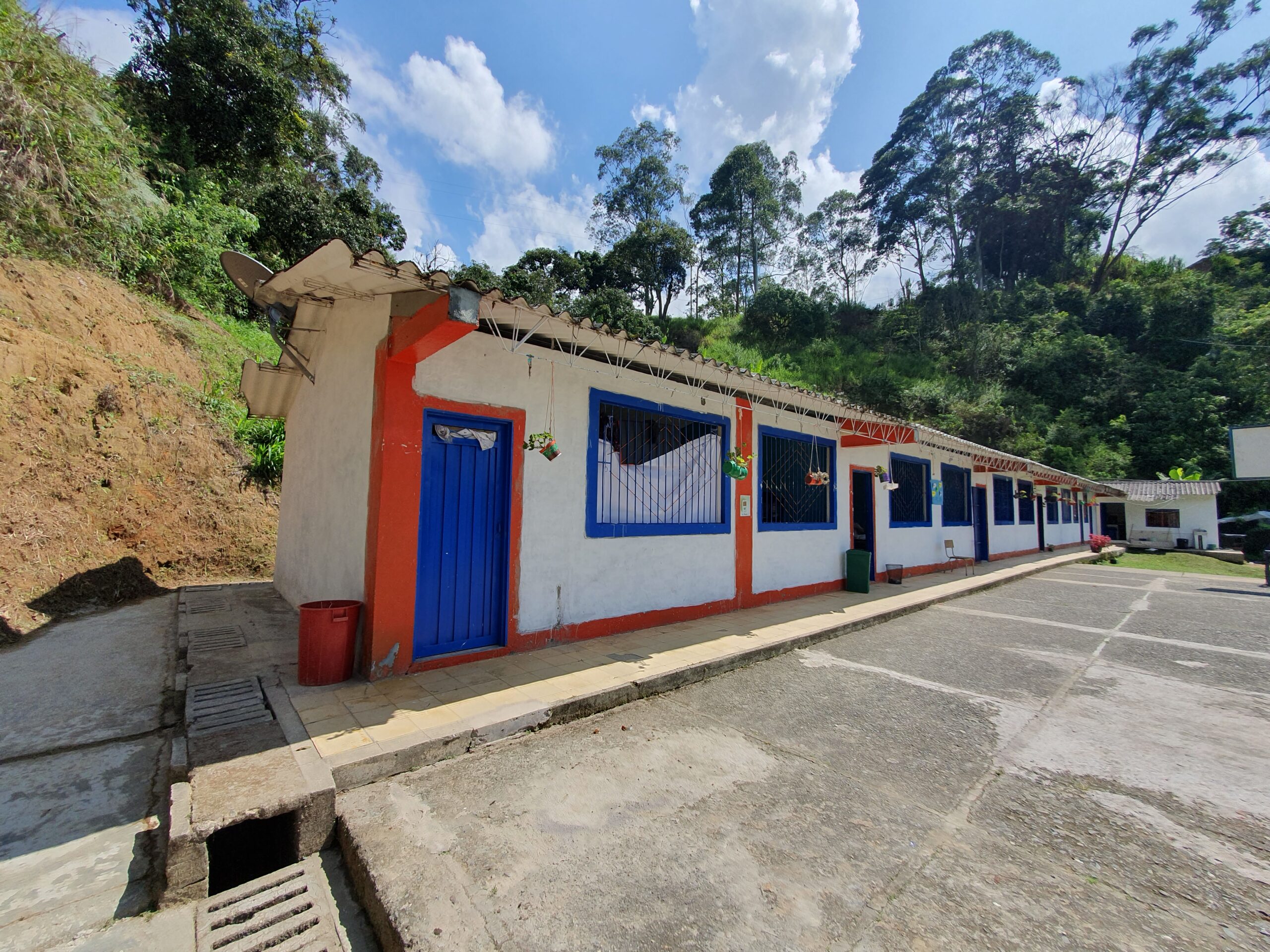
Schools in Colombia play a vital role in their communities, especially during disasters. But many rural schools, built with unreinforced masonry (URM) walls, are highly vulnerable to earthquakes. When a major quake strikes, these buildings can suffer severe damage, making them unsafe for both students and the wider community. The devastating earthquake on January 25, 1999, destroyed nearly 4,000 classrooms, exposing the urgent need for stronger, more resilient school buildings. Yet, more than 60% of Colombia’s structures—especially in the Andean region—are still made of URM, putting both education and public safety at risk. Funding for infrastructure improvements is limited, making it essential to find cost-effective, locally sourced solutions to strengthen rural schools against future earthquakes.
Impact of the Leading House Latin America Funding during 2021-2024
Schools in Colombia play a vital role in their communities, especially during disasters. But many rural schools, built with unreinforced masonry (URM) walls, are highly vulnerable to earthquakes. When a major quake strikes, these buildings can suffer severe damage, making them unsafe for both students and the wider community. The devastating earthquake on January 25, 1999, destroyed nearly 4,000 classrooms, exposing the urgent need for stronger, more resilient school buildings. Yet, more than 60% of Colombia’s structures—especially in the Andean region—are still made of URM, putting both education and public safety at risk. Funding for infrastructure improvements is limited, making it essential to find cost-effective, locally sourced solutions to strengthen rural schools against future earthquakes.
Our research team, bringing together scientists from EPFL in Switzerland and EIA, Universidad de Medellín, Universidad Militar Nueva Granada, and Universidad Nacional de Colombia, set out to tackle this urgent challenge. We aimed to develop an affordable, easy-to-implement retrofitting method for unreinforced masonry (URM) school buildings using bamboo reinforcement.
Through a combination of computer simulations and large-scale physical testing, we analyzed the weaknesses of typical school structures and tested solutions to improve their earthquake resistance. Our work didn’t stop in the lab—we actively engaged with local communities, training construction workers and engineers to apply these techniques in real-world settings.
This hands-on approach fostered collaboration between researchers and local builders, creating a valuable exchange of knowledge in sustainable construction and advanced modelling techniques. Our findings are promising, paving the way for a practical, low-cost, and environmentally friendly solution to strengthen rural schools against earthquakes.
Our project was supported by the Leading House for the Latin American region through a Research Partnership Grant. With this funding, we were able to design and carry out large-scale experimental tests at EIA University, studying the behaviour of URM walls under combined in-plane and out-of-plane loading. These types of tests are rare in existing literature and provide valuable insights into the seismic performance of similar structures across South America and the world. The flexibility of the Leading House in adjusting the project timeline was also crucial. It allowed us to effectively share our findings, support training programs, and help bridge the gap between research and real-world application in Colombian schools.
The project successfully demonstrated that low-tech, local, and cost-effective retrofitting techniques can significantly improve the seismic resilience of rural URM schools in Colombia. Through large-scale testing, two bamboo-based reinforcement methods were evaluated: one combining bamboo strips with low-gauge galvanized steel wire embedded in cement mortar, and another using only bamboo strips. Both approaches proved highly effective in enhancing the displacement capacity of representative school façade walls, offering promising solutions for reducing earthquake-induced structural failures.
Beyond technical advancements, the project’s impact extended to community engagement. Local masons, engineers, were trained in applying the retrofit strategy through on-site application of the retrofit on a pilot school in Antioquia. To further enhance seismic preparedness, we developed educational materials, including illustrated brochures, to help rural school students and teachers understand earthquake safety. This knowledge can then be shared within their communities, fostering greater awareness and resilience.
The research findings were also integrated into training materials and workshops, broadening knowledge dissemination among construction professionals and policymakers. A final seminar in Medellín, broadcasted to Bogotá, provided a platform for local authorities, stakeholders, and engineering students to learn about the project’s outcomes, fostering discussions on future implementation at a larger scale.
Furthermore, the project’s numerical modelling component focused on calibrating and using an open-source tool for seismic assessment of URM structures, enabling researchers to evaluate and retrofit a wider range of school structures across Colombia. Discussions are ongoing with local authorities to secure funding for scaling up the initiative.
The collaboration between Swiss and Colombian institutions has been instrumental in finding practical, locally adaptable solutions for seismic resilience in rural schools. Seeing firsthand how our research translates into tangible improvements in school safety has been incredibly rewarding. Training local masons and engineers has been a highlight, ensuring that our work continues beyond the scope of this project. Through this project we have established strong foundations for continuing our collaboration towards the improvement of school safety in Colombia and other neighbouring countries. We hope that this initiative inspires further efforts to safeguard education infrastructure in vulnerable regions worldwide.
